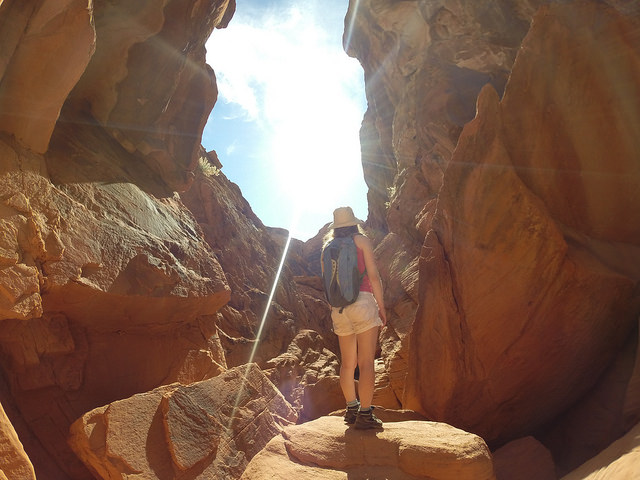
There are plenty of avid travelers who prefer to hike than roam the urban jungle. The thrill that they get when they explore the nature around them and discover beautiful vistas is second to none! If you are one of those type of travelers who love to seek joy by being one with nature then you need to equip yourself with the proper information, outerwear, and the must-have gizmos and tools for your hiking adventure.
A hiking adventure will not be complete without your handy camera to capture the beautiful vista around you for posterity sake. The waterproof camera is like any camera that has the point and shoot capability but with better protection from the elements. Since you are going to be surrounded by nature, the likelihood of having moisture around is high. You do need to carry all those casing for your expensive DLSR camera and fear that you may end up crashing your precious high-end camera. Carry a waterproof camera instead as this camera is ruggedly built for outdoor activities.
Travel documents
If you planning to join a group of hikers in another country, then it is advisable to carry your travel documents in a waterproof ziplock bag and tucked securely inside your bag.
Medical and first aid kit
(Photo credit: edisaster.com)
This is one of the primary things any hikers should carry whether it is a day-long hike or a long one. You will never know when you will need medication or first aid assistance. So, a handy first aid kit with enough supply for a group of people can help when an emergency arises.
Insect repellant
Nature is a good breeding ground of insects and it is wise to carry insect repellant in creams.
Informative maps, brochures, flyers
It is always wise to equip yourself with the proper knowledge of the place you are going to, the terrain, and weather conditions around the area.
Smart phones with GPS tracking app
(Photo from unsplash.com)
There are plenty of smart phones these days that can be installed with tracking apps. Bring your smart phone with GPS tracking app to help you navigate in the wilderness.
Clothing and footwear
Invest on a high-quality hiking boots that can weather any terrain regardless of season. If you are planning to hike during the colder season then get a nice snowshoes that can handle extreme weather conditions.
You need to bring warm clothing as it can get very cold in the mountains or forests. Weather may change all of a sudden so pack rain gears as well to keep you dry and warm.
Wear long socks too to deflect any cold draft and stave off any ticks!
Hiking/Trekking poles
These are sturdy poles that hikers and trekkers use when traversing the various terrains of their hikes. They have plenty of uses; thus, hikers and trekkers love to carry and use them. They provide balance during hikes on uneven terrains. They are also used to swipe off nature's nuisances like spiderwebs, vines, and even thorny bushes. Poles also aid in putting rhythm on hikers' steps, adding speed and agility to their movement. They also help reduce the pressure and tension on your feet and legs.
Headlamp or flashlight
(Photo credit: muchbuy.com)
It is good to carry headlamp and flashlight that are either solar powered, rechargeable, and batter operated. With hikes, you would usually start very early in the day and the only source of illumination you have is from either your headlamp or flashlight.
Sturdy and lightweight sleeping bags, tents or emergency blanket
(Photo taken from yahoo images)
Since you will be spending an overnight in this hike, take into consideration packing a good sleeping bag. Other hikers prefer to bring an emergency blanket instead of the whole tent kit because it is lightweight and has plenty of uses aside from providing warmth during cold temperatures and acting as mini shelter too by stringing and tying it on branches.
Waterproof backpack
Every hiker needs a good quality backpack that can withstand the weight of the load. A good backpack will also be durable enough to last a long hike and also, it should be waterproof to brave the elements.
Journal and pen
For the avid nature lover, a pen and paper is a must for every hike. The beauty of the surrounding is enough to trigger an inspiration worthy of mention in your journal, travelogue, or blog. Who knows, the notes you'll make along the way can one day become a novel to a great film? Wishful thinking!
Swiss-army knife, duct tape and some safety pins
(Photo credit: outdoorgearlab.com)
You'll never know when you might need all these but a torn garment or bedding or even a tent can easily be repaired with a nice safety pin or a duct tape.
Solar-powered battery charger with adaptors
(Photo credit: odditymall.com)
Since you are going to carry a smart phone and some source of illumination that needs to be recharged, a handy solar-powered battery charger with the appropriate adaptors for various connections for gadgets will come in very handy.
Food and hydration
(Photo credit: rei.com)
Pack lightly with energy bars, light sandwiches, easy-open canned goods that are ready to eat and few chips. You need to have a portable water purifier to help you purify the water from natural resources should you run out of bottled water. You can also carry some chlorine tablets if you don't have any portable water purifier.
Fire starter kit
(Photo credit: survivalcampingstore.com)
This is necessary when it gets very cold and you need to warm yourself up. Use a fire steel which is like a flint that makes plenty of spark. Make sure that you put off the fire when you are done to prevent wildlife fire.
Whistle
(Photo credit: lazada.com.my)
This is one the must-haves of any adventurer out there. Not that it is only small but it packs a punch in the survival gauge. It can help you when you get lost especially in the wilderness. Whistles are louder than the human voice and the sound can go much further than shouting. Also, shouting can wear you off. A good whistle will be one that is of high quality material and louder than standard whistles.
Once you have gathered everything you need, make sure you are well informed about hiking. Hiking is a strenuous activity and it requires physical strength and stamina. So be sure to keep yourself fit for the hike. Have fun! Be safe and take a lot of pictures!
Labels: hiking, hiking equipment, hiking tips, must-haves for an overnight hike, outdoor activities, travel, travel tips, what to carry for your hike, what to have for your hike